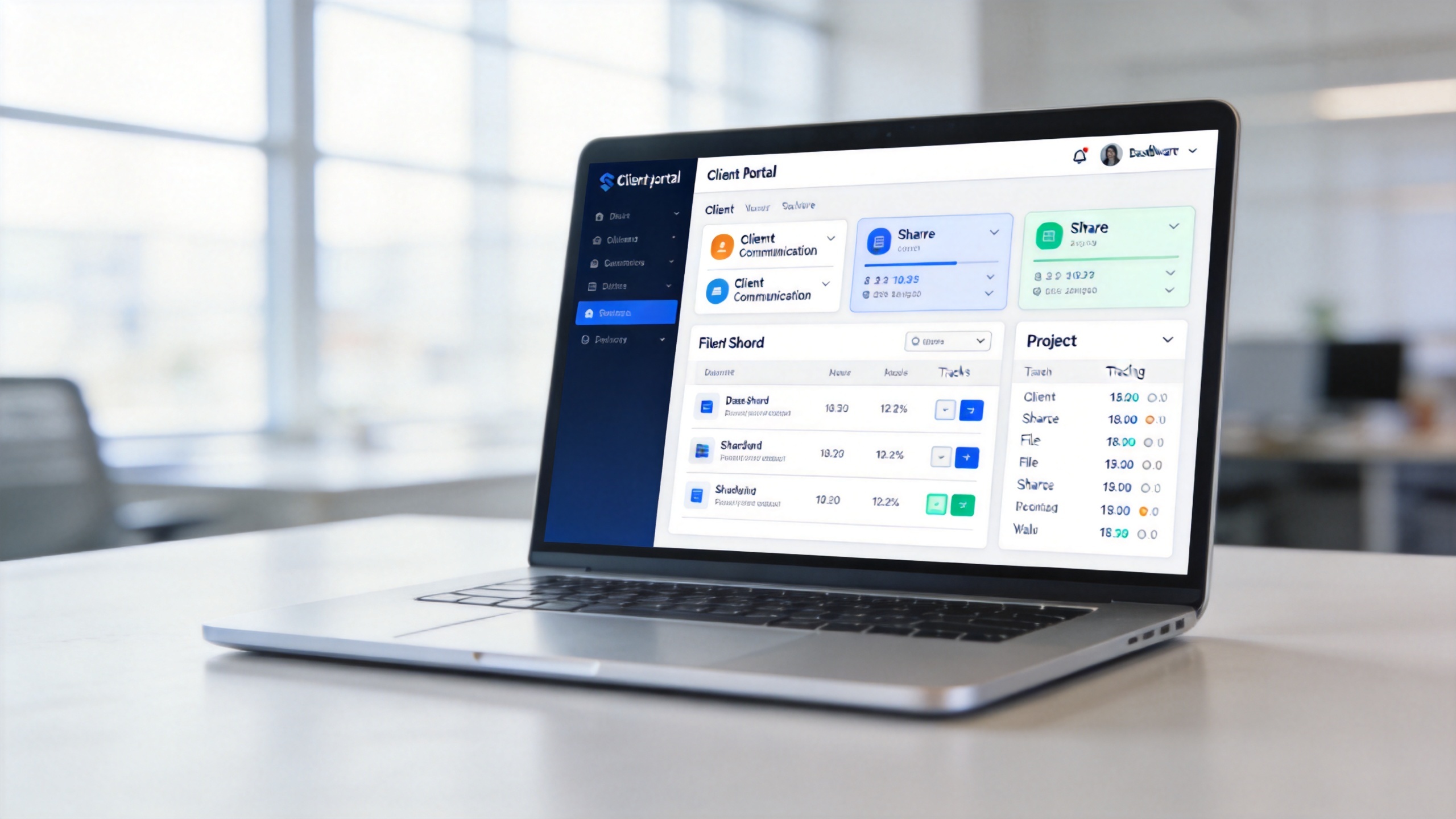
Selecting the beste Client Portal Plattform for your agency requires more than just a surface-level feature check; it demands an evaluation of how well the tool integrates into your existing tech stack via robust APIs. This guide focuses on SaaS solutions that prioritize developer-friendly environments, allowing agencies to automate workflows, sync data, and create a truly bespoke client experience.
The short list
When evaluating the market for portal software, the "short list" often includes tools that balance user interface simplicity with deep backend flexibility. For agencies, the goal is to reduce the friction of manual data entry while providing a professional, branded space for clients to collaborate.
- [OneDesk]: A hybrid platform that combines project management and helpdesk functionality, making it ideal for agencies that need to provide support and project updates in a single interface.
- [Teamleader Focus]: A comprehensive solution for European agencies that integrates CRM, project management, and invoicing, offering a centralized portal for client communication.
- [MyDocSafe]: Specialized for secure document exchange, e-signatures, and onboarding, providing a highly compliant environment for sensitive client data.
- [Helplama Helpdesk]: Focuses on the support side of the client relationship, offering a portal experience that emphasizes fast resolution and organized ticket tracking.
- [ThinkOwl]: An AI-powered helpdesk and portal solution that excels at automating ticket routing and providing self-service options for end-users.
Neighbourhood guide
The landscape of client portals is divided into three distinct neighborhoods: the CRM-centric giants, the project-management-first platforms, and the specialized document/support portals. Understanding which neighborhood your agency resides in is critical to selecting the beste Client Portal Plattform for your specific workflow.
- CRM-Integrated Ecosystems: Tools like [Salesforce Service Cloud] and [Microsoft Dynamics 365 Customer Service] are designed for large-scale operations. They offer immense power and API capabilities but require significant configuration.
- Project Management Hubs: These platforms, often found on [agentursoftware.biz], prioritize task tracking and milestone visibility. They are best for agencies focused on deliverables and timeline management.
- Service & Support Portals: These tools prioritize the ticket lifecycle. Platforms like [EcholoN] or [Helplama Helpdesk] are built to handle high volumes of client inquiries and provide structured feedback loops.
Picks by occasion
Not every client interaction requires the same level of depth. Your choice should depend on the "occasion"—whether you are onboarding a new client, managing a long-term retainer, or executing a one-off project.
- For High-Compliance Onboarding: When security and legal signatures are the priority, [MyDocSafe] is the industry standard for ensuring that sensitive data remains encrypted and compliant.
- For Multi-Service Agencies: If your agency provides both recurring support and project-based work, [OneDesk] offers the versatility to handle both within a single, unified client login.
- For Transparent Billing and Reporting: Agencies that need to show real-time progress and financial health often look toward [Teamleader Focus] to bridge the gap between project management and invoicing.
- For Automated Support Scaling: If your agency manages hundreds of small clients, using a tool like [ThinkOwl] allows for AI-driven self-service that prevents your team from becoming a bottleneck.
Know before you go
Before committing to a subscription, it is vital to audit your existing data flow. A portal is only as good as its ability to talk to your other tools. If you are already using [DashThis] for reporting or [clockodo] for time tracking, ensure your chosen portal software can either integrate with these tools or provide an API that allows for custom connections.
- API Documentation: Always check the public API documentation before purchasing. A "robust" API should include webhooks, RESTful endpoints, and clear rate-limiting guidelines.
- White-Labeling Depth: Does the portal allow for custom domains, CSS overrides, and email branding? A true client portal should feel like an extension of your agency's website.
- User Roles and Permissions: Can you restrict what a client sees? Granular permissions are the difference between a helpful portal and a cluttered one.
The Role of Public APIs in Scalability
The primary reason to prioritize a portal with a robust API is the ability to automate the "client lifecycle." When a client signs a contract in your CRM, a modern API-first platform can automatically create a project folder, set up a portal account, and invite the client—all without human intervention. This level of automation is essential for agencies looking to scale without increasing headcount.
- Webhook Triggers: Look for platforms that push events (e.g., "file uploaded," "ticket resolved") to external services via webhooks.
- Data Synchronization: Ensure you can pull data from the portal into your internal BI tools to analyze client behavior and engagement metrics.
- Custom Integrations: If your agency uses proprietary tools, a robust API allows your dev team to build a bridge between your internal system and the client-facing portal.
Balancing Self-Service and Human Support
While self-service is a hallmark of the beste Client Portal Plattform, it should never replace the human touch. The most effective portals are those that offer a "safety valve"—a way for clients to reach a human when the automated paths don't satisfy their needs.
- Knowledge Base Integration: Platforms that allow you to host a searchable FAQ within the portal significantly reduce the volume of incoming support tickets.
- Feedback Loops: Use the portal to trigger automated surveys after a project milestone, ensuring you capture client sentiment in real-time.
- Escalation Paths: Ensure that your portal software can route high-priority tickets to a specific account manager rather than a general support queue.
Security Standards and Compliance
For agencies handling sensitive data, the portal is your first line of defense. It is not enough for a tool to be "secure"; it must be auditable. When evaluating tools like [Complianty], look for clear documentation on how they handle data at rest and in transit.
- GDPR Compliance: For agencies in Europe, ensuring that data processing agreements are standard is non-negotiable.
- Audit Trails: A professional portal should log every action taken by a client, including logins, file downloads, and message reads.
- Access Control: Multi-factor authentication (MFA) should be a mandatory setting for all client accounts, not an optional add-on.
Choosing Between All-in-One and Best-of-Breed
Agencies often struggle to choose between an all-in-one suite (like [Microsoft Dynamics 365 Customer Service]) and a best-of-breed approach. An all-in-one suite offers seamless data flow but can be rigid. Best-of-breed systems offer more flexibility but require more effort to integrate.
- The Case for All-in-One: Ideal for larger agencies with dedicated IT resources who want a single vendor relationship and unified support.
- The Case for Best-of-Breed: Ideal for agile agencies that want to swap out components (e.g., using [clockodo] for time tracking and a separate portal for communication) as their needs evolve.
- The API Factor: Regardless of your choice, the API is the tie-breaker. If the best-of-breed tools have excellent APIs, they can function as a unified system, providing the best of both worlds.
Future-Proofing Your Agency Operations
The technology landscape moves fast. When choosing the beste Client Portal Plattform, consider the vendor's development velocity. Are they releasing new features? Do they have a public roadmap? Investing in a tool that is actively maintained ensures that your agency won't be stuck with legacy software in three years.
- Community and Support: Check if the vendor has an active developer community or a forum where you can ask technical questions about their API.
- Scalability: Ensure the pricing model allows you to scale up (or down) as your client list fluctuates.
- Innovation: Look for vendors that are integrating AI and machine learning into their portals to help summarize client requests or predict project delays.
FAQ: Frequently Asked Questions
What makes an API "robust" for a client portal?
A robust API is one that allows for full CRUD (Create, Read, Update, Delete) operations on core entities like users, projects, files, and tickets. It should also include comprehensive webhooks that allow your other software to react to changes in the portal in real-time.
Can I use a portal if I don't have a developer on staff?
Yes, many platforms offer "no-code" integration tools like Zapier or Make. These platforms connect to the portal’s API without requiring you to write code, allowing you to automate common tasks like "create a portal user when a new lead is added to my CRM."
How do I ensure my client portal is GDPR compliant?
Start by verifying the vendor's data processing agreement (DPA). Ensure the portal allows you to set data retention policies and provides the ability to export or delete client data upon request. Tools like [Complianty] can help you manage these compliance standards across your entire agency tech stack.
Is it better to build my own portal or buy a SaaS solution?
For 99% of agencies, buying a SaaS solution is more cost-effective and secure. Building your own portal requires ongoing maintenance, security patching, and infrastructure costs that rarely provide a return on investment compared to the feature-rich, specialized tools already on the market.
How do I transition clients from email to a portal?
The key is to provide value, not just a new login. Frame the portal as a way for the client to get faster answers, access historical documents without searching through email threads, and see project progress in real-time. Make the portal the "source of truth" for all project-related communication.
Conclusion
Finding the beste Client Portal Plattform is an investment in your agency's efficiency and client satisfaction. By focusing on tools with robust APIs, you ensure that your client portal is not just a static webpage, but a dynamic, automated hub that grows with your business. Whether you choose a specialized document portal like [MyDocSafe] or an all-encompassing project hub like [OneDesk], the priority must remain on seamless integration and a superior client experience. For further comparisons and deep dives into specific categories, explore the resources available at [Client Portal Software for Agencies: The Ultimate Buyer's Hub] to continue refining your agency's operational stack.