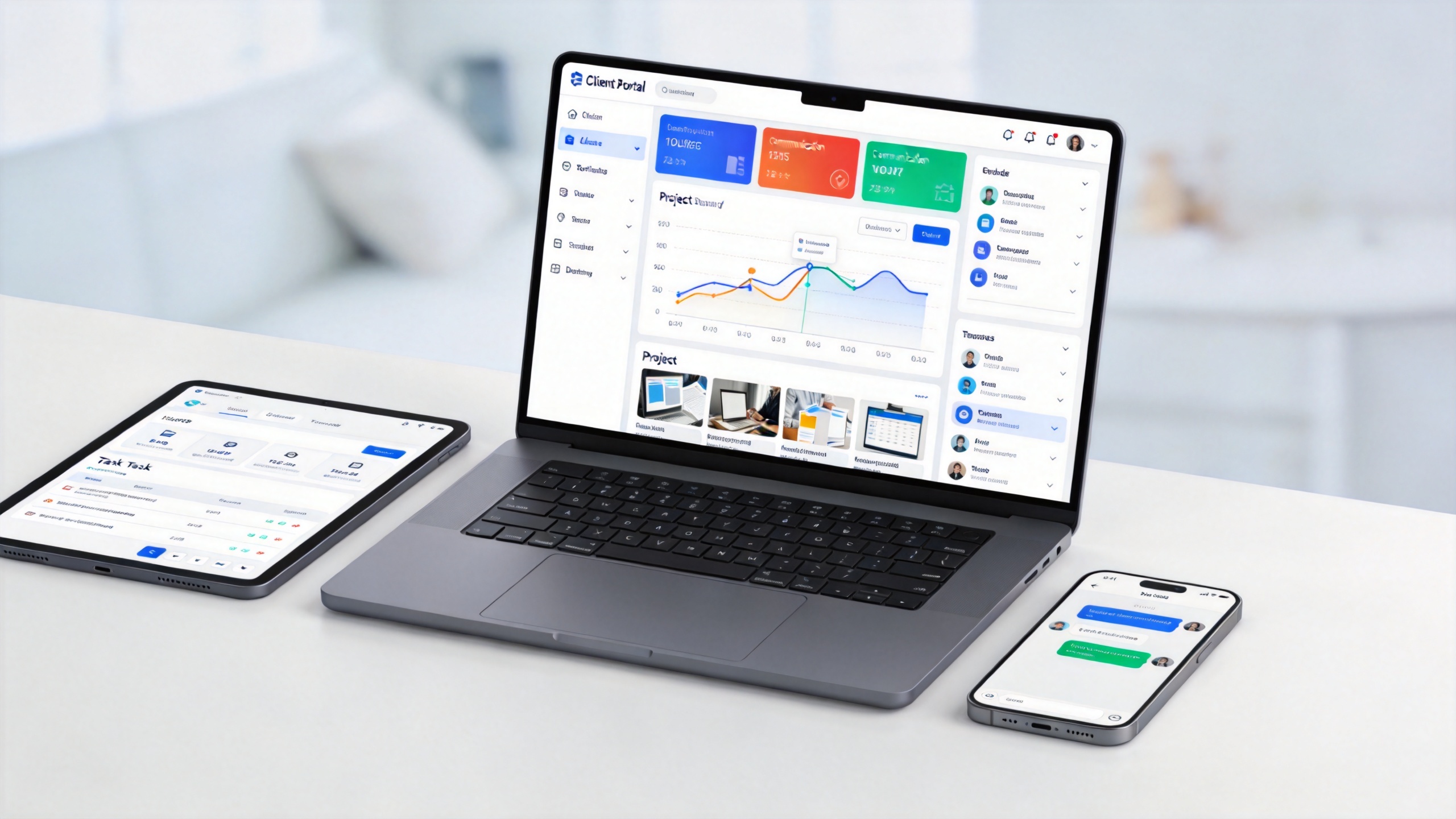
Choosing the right Client Portal Software für Agenturen is a foundational step in scaling your agency operations from a reactive, email-heavy workflow to a proactive, transparent client experience. By centralizing communication, file sharing, and project tracking, these platforms eliminate the "where is that file?" bottleneck and build long-term trust through professional, branded digital hubs.
The short list
When you are looking for a reliable solution, the market is divided between comprehensive enterprise suites and agile, purpose-built SaaS tools. If you are operating in the DACH region or require deep integration with existing business processes, you should consider these established players.
- Bitrix24: A powerhouse for agencies that need a full digital workspace including CRM, telephony, and project management under one roof.
- Basecamp: The gold standard for agencies prioritizing simplicity and clean communication over complex feature sets.
- OneDesk: A unique hybrid that merges help desk ticketing with project management, ideal for agencies managing ongoing client support.
- ThinkOwl: An intelligent, AI-driven service desk solution that excels at automating client inquiries and support tickets.
- EcholoN: A robust platform designed for complex service management and high-level process automation.
- Microsoft Dynamics 365 Customer Service: The enterprise choice for agencies deeply embedded in the Microsoft ecosystem.
- OS/: A modern, streamlined approach to managing agency operations and client interactions.
- Complianty: Essential for agencies that prioritize data protection and secure client document exchange.
Neighbourhood guide
Navigating the ecosystem of Client Portal Software für Agenturen requires understanding that these tools live in different "neighborhoods." Some are focused on the Service Desk (ticket-based), some on Project Management (task-based), and others on Enterprise Resource Planning (process-based).
The Service Desk neighborhood, populated by tools like OneDesk and ThinkOwl, is best for agencies that operate on a retainer or support-ticket model. Here, the portal acts as a gatekeeper for requests. If your agency is more project-based, the Project Management neighborhood—featuring Basecamp—is where you will find the best tools for collaboration, file versioning, and milestone tracking. For those who need a holistic view of the agency, broader platforms like Bitrix24 provide the "all-in-one" experience that connects your sales pipeline directly to your client delivery portal.
Picks by occasion
Selecting the right software often depends on your specific agency lifecycle stage or the nature of your client engagements.
- For the "High-Volume Support" Agency: If your clients constantly request small changes or support, OneDesk is the premier pick because it bridges the gap between a client-facing portal and your internal task management.
- For the "Creative/Design-Heavy" Agency: Basecamp is widely favored here because it avoids the "over-engineering" of enterprise tools, allowing creative teams to focus on assets rather than complex status updates.
- For the "Compliance-First" Agency: If you handle sensitive medical, legal, or financial data, Complianty provides the necessary security framework to ensure your client portals meet rigorous standards.
- For the "Enterprise Scaler": If you are moving into mid-market or enterprise clients, Microsoft Dynamics 365 Customer Service offers the depth and audit trails required by large procurement departments.
Know before you go
Before committing to a subscription, it is vital to audit your internal processes. Many agencies fail at implementation not because the software is bad, but because they have not defined their "Client Journey."
Ask yourself: Do my clients need to approve documents? Do they need to see their own billing history? Do they need to submit tickets, or just view project status? If you are looking for deeper insights into how to structure these decisions, review the Agency Client Portal Implementation Playbook. Additionally, consider if your team is ready for the shift; for more on this, read Internal Change Management: Getting Your Team to Use the Portal. Finally, ensure you are comparing apples to apples by reading the SaaS Client Portal Comparison Guide.
The role of time tracking
For many agencies, the client portal is inextricably linked to billing. If your agency charges by the hour, transparency is your best sales tool. Integrating time tracking directly into the client portal allows the client to see exactly how their budget is being utilized in real-time.
Tools like clockodo can be instrumental here. By providing clients with a clear, honest view of time spent, you reduce "invoice shock" and minimize the time spent on back-and-forth emails explaining line items. When you combine this with the general operational oversight found in agentursoftware.biz, you create a professional environment where the client feels in control of their investment.
Managing physical assets and resources
Occasionally, agencies manage more than just digital assets. If your agency handles physical equipment, rental gear, or complex inventory for clients, you need a different class of portal.
ToolSense offers a specialized approach to asset management that can be integrated into the broader client experience. By allowing clients to track the status, maintenance, or location of physical assets through a dedicated portal, you add a layer of value that standard project management tools simply cannot provide. This is especially relevant for event agencies, film production houses, or specialized marketing agencies that manage physical brand activations.
Security as a competitive advantage
In an era of frequent data breaches, your choice of Client Portal Software für Agenturen serves as a signal of your agency's maturity. Clients are increasingly asking about where their data is hosted and who has access to it.
Using a platform that emphasizes security, such as Complianty, allows you to market your agency as a "safe harbor" for sensitive client data. When evaluating your options, always check for:
- Granular user permission settings (who can see what folder?).
- Audit logs (who accessed which file and when?).
- Data residency options (does the data stay in the EU/DACH region?).
- Two-factor authentication (2FA) enforcement for all client users.
Customization vs. Standardization
A common trap for agencies is wanting a "perfectly branded" portal that looks exactly like their website. While white-labeling is important, prioritize functionality over aesthetics.
A portal that is easy for a non-technical client to navigate is worth more than a highly branded portal that is confusing to use. Platforms like OS/ focus on a clean, modern UI that feels intuitive to the client, which increases adoption rates. Remember, the goal of a client portal is to reduce friction. If the customization process makes the interface clunky or slow, your clients will eventually stop using it and revert to sending emails.
Frequently Asked Questions
What is the primary benefit of using Client Portal Software für Agenturen?
The primary benefit is the consolidation of information. Instead of searching through years of email threads to find a specific brief, contract, or final file, both the agency and the client have a "single source of truth." This significantly reduces administrative overhead and increases client satisfaction by providing 24/7 access to project status.
Can I use a general PM tool instead of a dedicated client portal?
Yes, many agencies start with general project management tools. However, dedicated portals often offer better "guest" or "client" access controls. Unlike standard PM tools, these portals are designed to hide internal agency notes, budget margins, and team-only communication, ensuring the client only sees what you want them to see. For more on this, check out Project Management Tools with Integrated Client Portals.
How do I encourage clients to actually log in?
The secret is to make the portal the path of least resistance. If you send an email saying "Please check the portal for the latest design," you are creating a barrier. Instead, make the portal the only place where deliverables are uploaded. When clients realize that the portal is where they get their work faster, they will adopt it naturally. See Internal Change Management: Getting Your Team to Use the Portal for strategies to get your internal team on board first.
Are these tools GDPR compliant?
Most SaaS tools listed here, especially those with a focus on the DACH market, are built with GDPR compliance in mind. However, compliance is a shared responsibility. You must ensure that you configure the settings correctly (e.g., data retention policies) and have a Data Processing Agreement (DPA) in place with your software provider. For more context, read German Client Portal Software: SaaS Solutions for DACH Agencies.
Do I need to be a technical expert to set these up?
Most modern SaaS client portals are designed for non-technical users. If you can set up a social media profile, you can generally configure these tools. However, the complexity lies in the workflow design—deciding which folders to create, how to structure tasks, and how to automate notifications. For guidance, refer to The Agency Client Portal Implementation Playbook.
Conclusion
The transition to using Client Portal Software für Agenturen is not just a technical upgrade; it is a strategic shift toward transparency and efficiency. By choosing the right tool—whether it is a specialized service desk like OneDesk, a creative-focused hub like Basecamp, or a robust enterprise platform like Bitrix24—you are setting your agency up for sustainable growth. Start by identifying your biggest operational bottleneck, choose a tool that solves that specific problem, and commit to a phased rollout with your clients. For a deeper dive into the market, continue your research with the Best Client Portal Software for Agencies: 2025 Comparison.