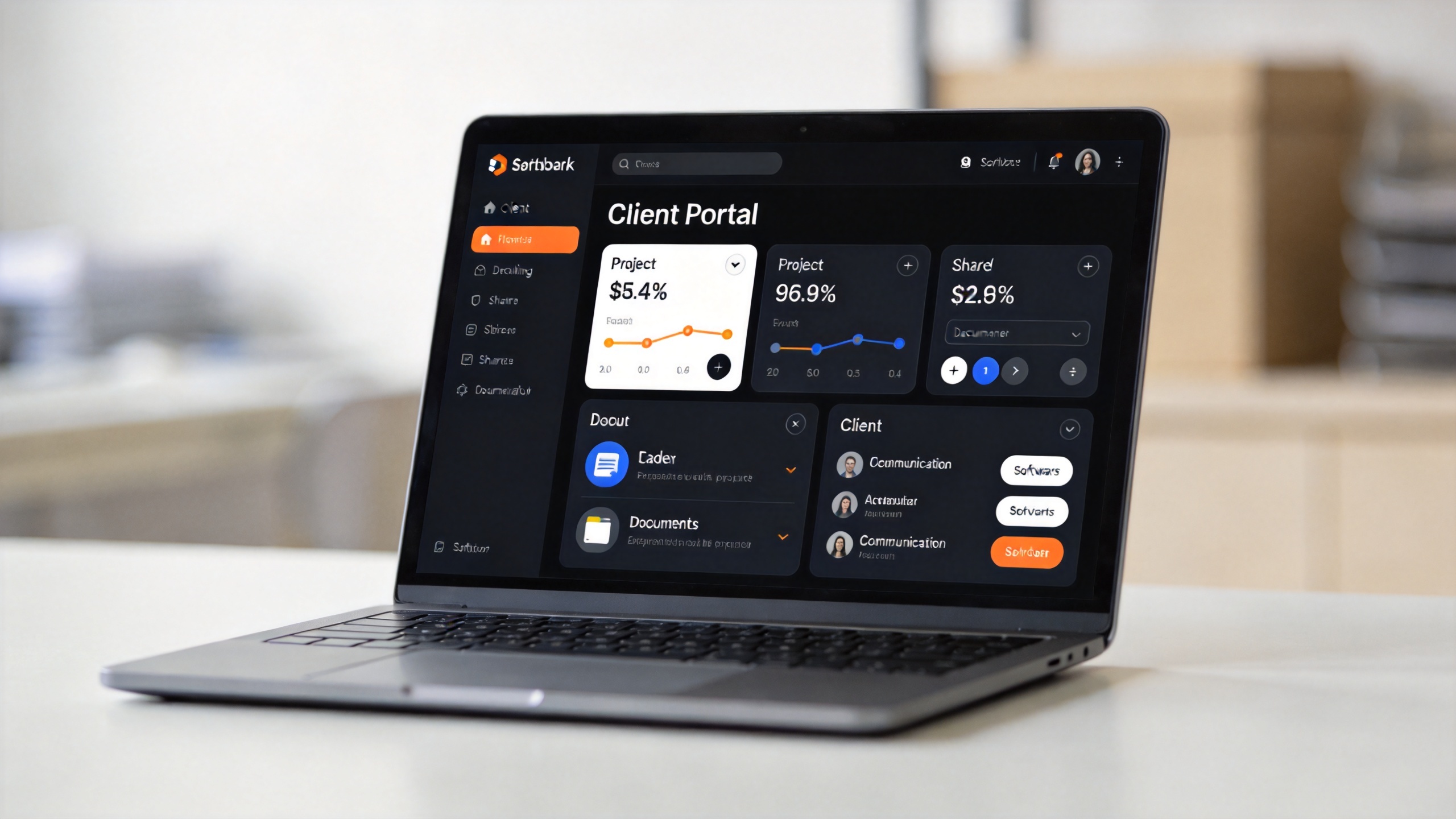
Integrating a Projektmanagement Tool mit Kundenportal into your agency’s tech stack is more than a convenience; it is a fundamental shift in how you maintain client relationships and operational efficiency. By bridging the gap between your internal workflows and your client’s visibility, you reduce friction, minimize redundant communication, and establish a single source of truth for every project milestone.
The short list
When selecting a platform, agencies must distinguish between standalone helpdesk solutions and comprehensive project management platforms that include a client-facing interface. The following SaaS tools offer robust API capabilities or native integration features that allow you to sync your agency’s backend data directly into a client-accessible environment.
- Teamleader Focus: Ideal for agencies needing to merge CRM, invoicing, and project management in one interface.
- OneDesk: A hybrid tool that combines helpdesk ticketing with project management, perfect for agencies needing a unified client view.
- Microsoft Dynamics 365 Customer Service: A high-end enterprise solution for complex API-driven workflows.
- Salesforce Service Cloud: The gold standard for agencies scaling their operations with heavy data integration needs.
- ThinkOwl: An intelligent helpdesk platform that utilizes AI to streamline client interaction.
- EcholoN: Highly customizable for technical agencies requiring deep process automation.
- Helplama Helpdesk: Focused on enhancing the client experience through proactive communication tools.
- MyDocSafe: Essential for agencies prioritizing secure document exchange and client signing workflows.
- clockodo: Perfect for time-tracking transparency, allowing clients to see project progress via logged hours.
- Complianty: A security-first approach to managing client data and compliance documentation.
- DashThis: While primarily for reporting, it serves as a specialized portal for data transparency.
- agentursoftware.biz: A resource for finding specialized agency-focused tools in the DACH region.
Neighbourhood guide
Navigating the landscape of client-facing tools requires understanding where your agency sits in the ecosystem. Some tools are "All-in-One" suites where the portal is a native feature, while others are "Best-of-Breed" tools that rely on API integrations to connect with your existing project management stack.
- The All-in-One Ecosystem: Tools like Teamleader Focus provide a seamless experience because the portal is built on the same database as the project management and billing modules. You don't need to "integrate" them; they are natively connected.
- The Integration-First Ecosystem: If you use specialized tools like clockodo for time tracking, you may need to use an API to push that data into a broader client portal. This approach offers more flexibility but requires a higher technical overhead to maintain.
- The Security-Focused Ecosystem: For agencies handling sensitive information, platforms like Complianty or MyDocSafe act as secure vaults. Their "neighbourhood" is defined by compliance, audit trails, and encryption rather than just task management.
Picks by occasion
Choosing the right Projektmanagement Tool mit Kundenportal depends heavily on your agency’s specific operational needs at a given moment in the project lifecycle.
- For Onboarding New Clients: Use MyDocSafe to automate the collection of NDAs, contracts, and onboarding questionnaires. It removes the back-and-forth of email attachments.
- For Transparent Billing and Time Tracking: If your clients are sensitive to budget burn-rates, clockodo provides the necessary transparency to keep projects on track without constant status meetings.
- For High-Volume Support & Maintenance: Agencies managing ongoing technical support should look toward OneDesk or Helplama Helpdesk, which allow clients to submit tickets and view the status of their requests in real-time.
- For Data-Heavy Reporting: When your agency provides monthly performance metrics, DashThis allows you to create a professional portal where clients can view live dashboards without needing access to your internal analytics tools.
Know before you go
Before committing to a SaaS platform, you must audit your agency's technical maturity. A portal is only as good as the data you feed it. If your internal project management processes are disorganized, a portal will simply expose that chaos to your clients.
- API Capabilities: Does the tool have a REST API? Can you push custom fields from your internal database to the client-facing view?
- User Permissions: Can you restrict client access to specific folders, tasks, or financial records? Granular control is essential for preventing data leakage.
- White-Labeling: Does the tool allow for custom domains and branding? A portal should feel like an extension of your agency’s website, not a third-party login page.
- Mobile Experience: Many clients work on the go. Ensure the platform offers a responsive interface or a dedicated mobile app for quick approvals and updates.
Technical foundations of portal integration
Integrating a client portal is not just about logging in; it is about data synchronization. When you select a Projektmanagement Tool mit Kundenportal, you must ensure that the platform supports webhooks. Webhooks allow your internal system to "push" updates to the portal automatically when a status changes (e.g., from "In Progress" to "Review").
- Event-Driven Updates: Configure your system to trigger a notification to the client portal whenever a milestone is marked as complete.
- Authentication Sync: If possible, look for Single Sign-On (SSO) support to simplify access for your clients, especially if they are working with multiple departments in your agency.
- Data Mapping: Spend time mapping your internal task statuses to client-friendly labels. Your internal status might be "Internal QA," but the client should see "Reviewing Deliverable."
Security and compliance in the portal
When you provide clients access to a portal, you are opening a window into your infrastructure. You must prioritize tools that adhere to modern security standards, such as GDPR compliance and SOC2 certification.
- Access Controls: Implement Multi-Factor Authentication (MFA) for all client accounts.
- Audit Logs: Ensure the platform tracks who accessed which document and when. This is critical for accountability.
- Data Isolation: Verify that the platform uses multi-tenant architecture to ensure that one client’s data is never visible to another. Platforms like Complianty are designed with these specific security requirements in mind.
Scaling your portal strategy
As your agency grows, the portal should scale with you. A common mistake is starting with a tool that is too rigid. If you have 5 clients, a manual portal setup is fine. If you have 500, you need an automated, API-driven solution.
- Automated Provisioning: Use API calls to automatically create a portal space for a new client the moment they are marked as "Won" in your CRM.
- Template-Based Setup: Create standard project templates that include pre-configured portal views. This ensures that every client receives the same high-quality experience without manual effort.
- Feedback Loops: Use the portal to collect client feedback directly on tasks. This creates a historical record of communication that is invaluable for project retrospectives.
The role of reporting in client portals
Transparency is the greatest weapon against "scope creep." By providing a portal that shows exactly where the budget is being spent, you empower the client to make informed decisions.
- Visualizing Progress: Use tools like DashThis to create visual timelines. A progress bar is often more effective than a 500-word status report.
- Document Approval Workflows: Instead of email threads, use the portal for document approval. This creates a clear timestamped record of who approved what, which is vital for legal and billing protection.
- Proactive Alerts: Configure the portal to send automated alerts when a project hits a budget threshold (e.g., 80% of hours used).
Managing the client transition
Switching from email to a portal requires a change management strategy. Clients are often accustomed to the "email-everything" workflow, and they may resist a new login.
- The "Why" Campaign: Clearly communicate the benefits to the client: faster approvals, 24/7 access to files, and reduced email clutter.
- Guided Onboarding: Create a short video walkthrough of the portal for your clients. Show them exactly where to find their invoices, reports, and active tasks.
- Hybrid Phase: Allow a 30-day transition period where you accept requests via both email and the portal, while gently nudging clients toward the portal for all future updates.
API-first vs. UI-first tools
Distinguishing between these two categories is essential for your long-term success. UI-first tools are ready out of the box but may be harder to customize. API-first tools require development time but offer infinite flexibility.
- UI-First (e.g., Teamleader Focus): Best for agencies that want to get started immediately without a dedicated developer on staff.
- API-First (e.g., Salesforce Service Cloud): Best for large agencies with specific, complex data requirements that need to be surfaced in a custom-branded portal.
- The Middle Ground: Many tools offer a mix, providing a solid default UI with the ability to inject custom CSS or pull data via API for specialized widgets.
Frequently Asked Questions
What is the primary benefit of using a Projektmanagement Tool mit Kundenportal?
The primary benefit is the reduction of "hidden" work. Clients often feel anxious when they don't know the status of a project. A portal provides visibility, which builds trust and significantly reduces the number of "check-in" emails your team has to answer.
Can I white-label these portals to match my agency branding?
Yes, many SaaS platforms, such as Teamleader Focus or OneDesk, allow you to upload your logo, use custom colors, and even map the portal to a subdomain (e.g., portal.youragency.com). Always check the specific pricing tier, as white-labeling is often reserved for higher-level plans.
How do I ensure client data remains secure in a portal?
Security starts with the platform provider. Look for tools that offer SOC2 Type II compliance, robust encryption at rest and in transit, and granular role-based access control (RBAC). Furthermore, always enforce MFA for your own team and encourage your clients to do the same.
Is it difficult to integrate these portals with my existing CRM?
It depends on the tool. If you choose a platform that is already part of a wider ecosystem (like Microsoft Dynamics 365 Customer Service), integration is often native. For standalone tools, look for platforms that offer pre-built connectors for Zapier or Make, which can automate the data flow without needing custom code.
Should I provide portal access to all clients?
Not necessarily. For one-off projects or small tasks, a portal might be overkill and introduce unnecessary friction. Portals are most effective for long-term retainers or complex, multi-phase projects where consistent documentation and status updates are required.
What happens if the portal software goes down?
Always have a contingency plan. While SaaS providers offer high uptime guarantees, your agency should maintain an offline backup of critical project documents. Ensure that your contract with the software provider includes clear Service Level Agreements (SLAs) regarding uptime and data recovery.
Conclusion
Adopting a Projektmanagement Tool mit Kundenportal is a strategic move that professionalizes your agency, protects your time, and enhances the client experience. By choosing the right tool—whether it’s an all-in-one suite like Teamleader Focus or a specialized solution like MyDocSafe—you move away from the chaotic, email-heavy workflow of the past and into a scalable, transparent, and efficient future. Evaluate your needs, prioritize security, and start small to ensure a smooth transition for your team and your clients.